
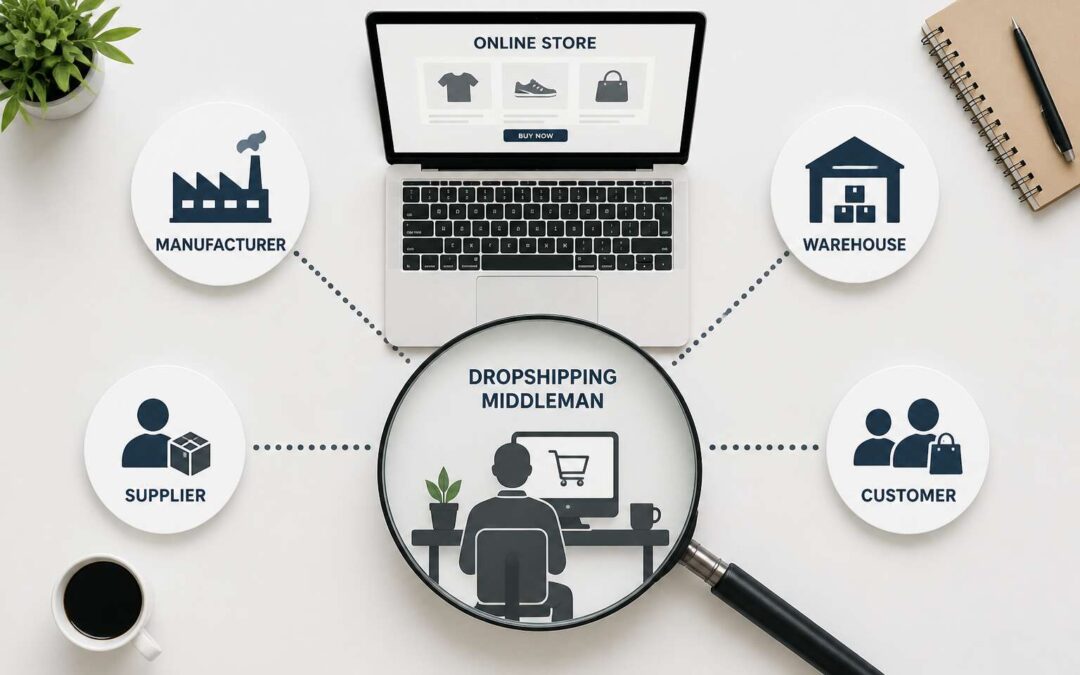
Decoding Ownership in Dropshipping
Why Ownership Confusion Arises
The question of who owns dropshipping feels deceptively simple. When a customer in Johannesburg receives a parcel shipped from a Cape Town warehouse, the transaction involves several actors: the retailer, the supplier, the courier. Ownership never quite rests with any single party.
This ambiguity stems from the structural separation between sales and fulfilment. The retailer never sees the product. The supplier never meets the customer. Each party owns a fragment of the process, but nobody owns the whole experience. For anyone asking who owns dropshipping, the answer depends entirely on your position in the chain.
- The customer owns the payment and the expectation.
- The retailer owns the relationship and the risk.
- The supplier owns the inventory and the dispatch.
That fragmentation creates real confusion. Legal contracts rarely clarify the matter, because most arrangements run on informal trust rather than formal definitions.
The Role of the Supplier
The supplier operates where the transaction becomes tangible. While the retailer answers emails and the customer tracks parcels, the supplier touches the goods, wraps them, and hands them to the courier. In South Africa, where distances stretch from Johannesburg to Durban, this role carries particular weight. The supplier’s warehouse is the point where promises become parcels.
Ask who owns dropshipping and the supplier offers the most grounded answer. They own the stock, the storage, and the speed of dispatch. Without their reliability, the retailer’s promises dissolve. The supplier anchors the entire enterprise, even when their name appears nowhere on the packaging.
The Retailer’s Claim
From storefront to storefront, across Cape Town’s winding streets or Pretoria’s quiet suburbs, the retailer carries a different kind of weight. They own what the supplier never touches: the customer’s trust. Yes, the supplier holds the stock, but the retailer holds the conversation.
In South Africa, where courier delays can stretch patience thin, the retailer absorbs every complaint, every anxious query. They own the brand’s reputation, the marketing channels, and the data that reveals what customers truly want.
- They set the prices and absorb exchange rate swings.
- They handle refunds when parcels vanish.
- They keep the customer’s loyalty long after the box arrives.
Ask who owns dropshipping and the retailer’s answer is quieter but no less certain. They own the relationship, the history, and the next conversation. Ownership here is not a title on paper. It is a burden carried in shifts, and the retailer carries it longest.
Customer Ownership After Purchase
A parcel lands on a Durban doorstep at sunset. The supplier has moved on. The retailer has closed the ticket. But the transaction is not finished. The customer owns what follows. They own the unboxing, the daily wear, and the decision to keep or return.
Consider the concrete items they now control:
- The product’s real lifespan, not the advertised one.
- The shipping costs they absorb for a return.
- The private verdict they give to friends.
This is the overlooked moment. Once the courier leaves, the customer takes charge. The retailer holds the receipt, but the customer holds the reality. So when you ask who owns dropshipping, the answer changes at the doorstep. The customer owns the last stage, and that ownership shapes every future sale.
Legal Ownership Frameworks for Dropshipping Businesses
Choosing a Business Structure
The Companies Act 71 of 2008 settles a critical question: who owns dropshipping inventory versus who owns the enterprise itself. That distinction surprises many merchants! In South Africa, a private company (Pty) Ltd creates a legal separation between the business and its shareholders. Sole proprietors enjoy no such separation. The legal owner of the dropshipping operation is the entity named on the registration certificate, not the person who manages the store.
The structure you choose determines several ownership questions:
- Sole proprietorship: you and the business are legally identical
- Pty Ltd: the company owns the assets, trademarks, and supplier contracts
- Partnership: co-owners share ownership according to the agreement
I have seen many founders assume otherwise. Owning the entity does not mean owning each transaction. The structure resolves who owns dropshipping as a going concern, who signs supplier agreements, and who faces liability when disputes arise.
Contracts with Suppliers
Contracts with suppliers determine who owns dropshipping in practice, even when the registration certificate says otherwise! A supplier agreement names the legal entity as the buyer. If the contract lists an individual’s name, that person holds the rights and the obligations. This distinction matters when a supplier terminates the agreement or withholds stock.
The ownership question also surfaces in the terms themselves. Consider these clauses:
– Delivery terms that transfer risk at the port or the warehouse
– Payment terms that establish who funds the inventory before sale
– Dispute resolution clauses that bind the entity to arbitration
Each clause assigns responsibility to a legal person. When a supplier invoices the Pty Ltd, the company owns that transaction. The founder’s personal assets stay separate. But a sole proprietor who signs in their own name owns the entire risk personally. In my experience, the contract resolves who owns dropshipping more clearly than any verbal arrangement.
Intellectual Property Rights
South Africa’s Companies Act treats a registered entity as a separate legal person. That distinction determines who owns dropshipping when disputes reach the CIPC or the courts. The registration certificate names the juristic person, and that name carries both rights and liabilities.
Intellectual property adds another layer. A brand name, logo, or proprietary system belongs to the entity that registers it under the Companies and Intellectual Property Commission. I have watched founders lose brand value because they registered trade marks in their personal names, not the company’s. Consider these ownership markers:
– Trade mark registration in the entity’s name
– Copyright assignment clauses in developer agreements
– Domain name registration under the company email address
Each marker establishes a public record. When a supplier or competitor asks who owns dropshipping, the answer sits in those filings.
Tax Obligations and Ownership
South Africa’s tax legislation resolves who owns dropshipping in a manner that catches founders off guard. The entity registered with SARS carries the tax burden, not the individual behind the keyboard. A private company is a separate juristic person for income tax, VAT, and provisional tax purposes. Personal liability only appears when you signed a surety agreement or acted recklessly.
The framework operates through clear markers:
– VAT registration becomes compulsory when taxable turnover exceeds R1 million
– Provisional tax returns carry the entity’s reference number
– Customs import duties attach to the registered importer of record
SARS keeps its own paper trail. Those records show who owns dropshipping when a tax dispute emerges. Ownership never rests on who manages the storefront. It rests on whose tax number appears in the system.
Regulatory Compliance
In South Africa, the answer emerges from regulatory filings, not marketing materials. The Companies and Intellectual Property Commission (CIPC) records the registered directors and beneficial owners. The Consumer Protection Act adds another layer, holding the entity that solicited the sale accountable for refunds and returns.
Regulatory compliance creates a visible trail. Consider the markers that define ownership:
- Annual returns and beneficial ownership declarations
- Registered physical address and operating licence
- POPIA compliance records for customer data
Each filing records a name. That name, captured in state systems, is who owns dropshipping when regulators come calling.
Logistical Ownership: From Order to Delivery
Ownership Transfer Points
A parcel in transit occupies a legal grey zone. For dropshippers, the moment of ownership transfer remains unresolved across many orders. That is because who owns dropshipping depends on contractual terms, not physical custody.
Ownership can shift at several points.
- When the customer’s payment clears.
- When the supplier hands the parcel to the carrier.
- When the customer accepts delivery.
Each option alters liability for lost or damaged goods. In South Africa, the Consumer Protection Act adds statutory layers, yet it does not define commercial ownership between retailer and supplier.
The retailer never holds inventory, so their claim rests solely on documents. The supplier retains control until a specific event. That event, once defined, decides who owns dropshipping from order to delivery.
Carrier Responsibility
The delivery driver rarely knows who owns the parcel in their hands. They hold thousands of boxes daily, none of them their own. For dropshipping, physical custody creates a paradox. The supplier shipped it. The retailer sold it. The customer wants it. But the carrier holds the cardboard.
Carrier responsibility begins with the barcode scan and ends at the threshold. South Africa’s Consumer Protection Act protects the buyer during transit, yet ownership stays contractual. The carrier is a custodian, not an owner. They answer for loss or damage, not title. In my experience, this surfaces only when something goes missing.
Consider what happens in transit:
- The parcel waits in a depot.
- A worker misplaces it.
- The driver delivers to the wrong address.
None of these shift ownership. They shift responsibility. Yet who owns dropshipping remains tied to the contract, not the courier’s route. The carrier answers for the parcel’s safety, not its legal fate!
Insurance and Liability
Insurance follows the party with the insurable interest. For a dropshipping order, that interest shifts twice before the customer opens the box. The supplier holds risk until the carrier scans the parcel. The retailer holds risk during transit. The customer holds risk from the moment of delivery.
Liability for damage or loss depends on who arranged the shipment. If the retailer contracts the carrier, the retailer answers for claims. If the supplier arranges shipping, the supplier carries that burden. The question of who owns dropshipping does not determine who pays for a broken item. The contract and the insurance policy do.
- The retailer’s courier account covers the transit claim.
- The supplier’s insurance covers warehouse incidents.
- The customer’s protection applies after the handover.
This is where logistical ownership gets practical. A missing parcel does not mean the customer owns it. Someone must file the claim and wait for the outcome.
Tracking and Documentation
Tracking numbers do not settle ownership. They settle accountability. When the supplier hands a parcel to the courier, the digital record begins, but the question of who owns dropshipping remains in the paperwork, not the parcel status.
Documentation matters more than the dashboard. The retailer’s shipping label names the contracting party. The supplier’s packing slip names the origin. The waybill records every scan, every handover, every delay.
- The pickup scan transfers physical custody.
- The destination scan transfers liability.
- The delivery confirmation transfers responsibility to the customer.
For a South African retailer, the SARS invoice and the customs declaration must match the actual flow of goods. If they do not, the ownership question becomes a legal one.
Financial Ownership and Revenue Streams
Payment Processing Ownership
Cash moves through a dropshipping operation in ways that make ‘who owns dropshipping’ a question of timing. When a customer pays by card, the funds sit in the processor’s holding account. That processor is not the owner; it is a custodian. The retailer owns the receivable, but the processor withholds settlement for days.
The supplier expects payment before goods ship, so the retailer fronts the wholesale cost. Financial ownership follows a sequence:
- The customer pays, and the funds sit with the processor.
- The processor settles the retailer’s account, net of fees.
- The retailer pays the supplier, leaving the margin.
If the processor retains a reserve, the retailer’s cash flow tightens. A chargeback claws the funds back before the supplier sees them. So the answer to who owns dropshipping is never a single account. It is a shifting control held by whoever has the money and the right to move it.
Revenue Distribution
Gross revenue rarely tells you who owns dropshipping. I’ve seen stores celebrate R500 sales while the supplier quietly takes R350, the gateway grabs R15, and ads devour R80. The leftover R55 is the retailer’s actual prize, assuming nothing goes sideways!
Revenue streams beyond plain product sales exist. Some retailers collect referral fees from supplier marketplaces. Others mark up expedited shipping beyond the courier’s real price. Each side stream creates a separate claim on the cash, which complicates ownership further.
- The supplier holds the largest claim until goods ship.
- The payment processor holds a temporary claim through settlement holds.
- The retailer holds the residual claim after every deduction.
Distribution follows a rigid order. Customer payment, processor fee, supplier cost, marketing spend, platform fee, then margin. Whoever controls that order controls the money, and that control shifts daily, which is why the answer to who owns dropshipping changes with each transaction.
Chargebacks and Refunds
Chargebacks and refunds reset the ownership claim in an instant. When a customer disputes a transaction, the payment processor pulls funds from the retailer’s account before the supplier learns of the problem. The retailer carries the immediate loss, then waits to recover from the supplier. That reversal means the money is never truly owned until the dispute window closes.
Several factors determine who finally absorbs the refund:
- The processor’s holding period
- The supplier’s return policy
- The customer’s bank timeline
In South Africa, where cross border shipping disputes are common, the supplier often keeps the product payment while the retailer faces the reversal alone. The dropshipping model creates a permanent tension: revenue appears distributed, but the risk pools in one place. The answer to who owns dropshipping shifts each time a refund erases what looked like profit. Every chargeback reopens the chain, and the retailer’s residual claim means nothing without a protective agreement.
Profit Ownership After Expenses
Profit ownership begins only after every cost is paid. The supplier invoice, the freight bill, the payment gateway fee, the advertising spend. Each expense reduces the pot. What remains is the retailer’s true claim.
In South Africa, cross border margins shrink quickly. Import duties and currency swings eat into gross revenue. A supplier may show a healthy product margin, but the retailer shoulders the real overhead. The question of who owns dropshipping becomes a question of who survives the cost structure.
- Product cost
- Shipping and customs
- Platform and gateway fees
- Marketing spend
Only after these obligations clear does profit exist. And that profit belongs to the entity named on the supplier agreement, not the one chasing the sale. For many retailers, the answer to who owns dropshipping is the bank account that ends the month in positive territory.
Marketing and Brand Ownership in Dropshipping
Brand Identity Ownership
Every Cape Town entrepreneur knows the frustration of asking who owns dropshipping while a supplier in Shenzhen ships the identical gadget to a rival down the road. In the marketing arena, the logo and the ad spend generate a perception, yet the underlying product remains a common commodity.
Brand identity ownership is therefore a contest of recollection. The party that owns the customer’s recall holds the genuine asset. If your advert is the one they remember, you own that identity, functionally speaking. The supplier owns the stock, but they do not own the loyalty.
- The customer data and email list.
- The paid social media audiences.
- The registered trademark for your specific name.
So when asking who owns dropshipping, consider the marketing spend, because the retailer owns the brand identity only as long as they outlast the algorithm and outspend the copycats. That is a fleeting, expensive, and real ownership.
Customer Data Rights
The customer data resting in your email lists and ad platforms is the actual value of your business. When a supplier in Shenzhen ships the same product to three other retailers, only you know how to reach your buyers again.
This is where the question of who owns dropshipping takes a practical turn. Ownership of the merchandise transfers at the warehouse door, but ownership of the customer relationship never leaves your dashboard. The supplier has no legal claim to your subscriber list, your purchase history, or your abandoned cart data.
- Email subscriber lists built from your own campaigns.
- Custom audiences created from customer behaviour.
- Purchase records and returns history.
- Consent records for marketing communication.
These assets remain yours regardless of who fulfils the order.
Marketing Assets Ownership
No supplier has ever run a single one of your ads. That fact defines the ownership question. Your marketing assets are the creative output that separates your store from a commodity listing. The photos you commission, the video ads you produce, and the copy you write all belong to you.
This is the practical answer to who owns dropshipping. The supplier owns the manufacturing line. You own the creative assets that drive demand. A branded packaging insert or unboxing experience is your work to protect.
In South Africa, copyright protection applies automatically to original creative work. You do not need to register it. I have watched this protect sellers who switched suppliers overnight.
Your marketing asset portfolio includes:
- Video ads and motion graphics
- Product photography and lifestyle imagery
- Email templates and sequences
- Landing page designs and copy
These assets remain yours even if the supplier relationship ends. In the debate over who owns dropshipping, your marketing assets are your strongest claim.
Platform Role and Ownership
Every marketplace operates as a service provider, not an owner. It supplies the checkout infrastructure and customer traffic, but it does not inherit your brand. It cannot claim your logo or your tone. It is a middleman with fixed fees, not a partner with shared equity.
Terms of service reserve rights to use product images for search, but they never take ownership of your business identity. Your store name, your customer reviews, and your brand voice remain under your control.
Platform ownership is limited to systems:
- checkout processes
- hosting infrastructure
- search algorithms
None extend to brand narrative.
In South Africa, sellers build brands on third party marketplaces. When the platform changes its rules, the seller adapts, but the brand does not dissolve. The answer to who owns dropshipping remains with you. When asking who owns dropshipping, look past the platform. The platform owns the backend, but you own the brand.
Building Long-Term Asset Ownership
Marketing dollars spent on ads for a single product vanish when the campaign ends. Marketing that builds a brand creates something durable. In dropshipping, your customer list, your content, and your reputation are assets that no supplier or platform can claim. The question of who owns dropshipping becomes clearer when you consider where the value accumulates.
Your marketing efforts either feed a rented audience or build your own. Long-term assets include:
- Email subscriber lists with consent records
- Original photography and video you commission
- Reviews and testimonials from verified buyers
- Search rankings attached to your domain
Each asset compounds over time. The platform may close your store tomorrow. The supplier may discontinue a product. The audience you built through marketing remains yours! When asking who owns dropshipping, the honest answer is the one who invested in assets that outlive the transaction.