
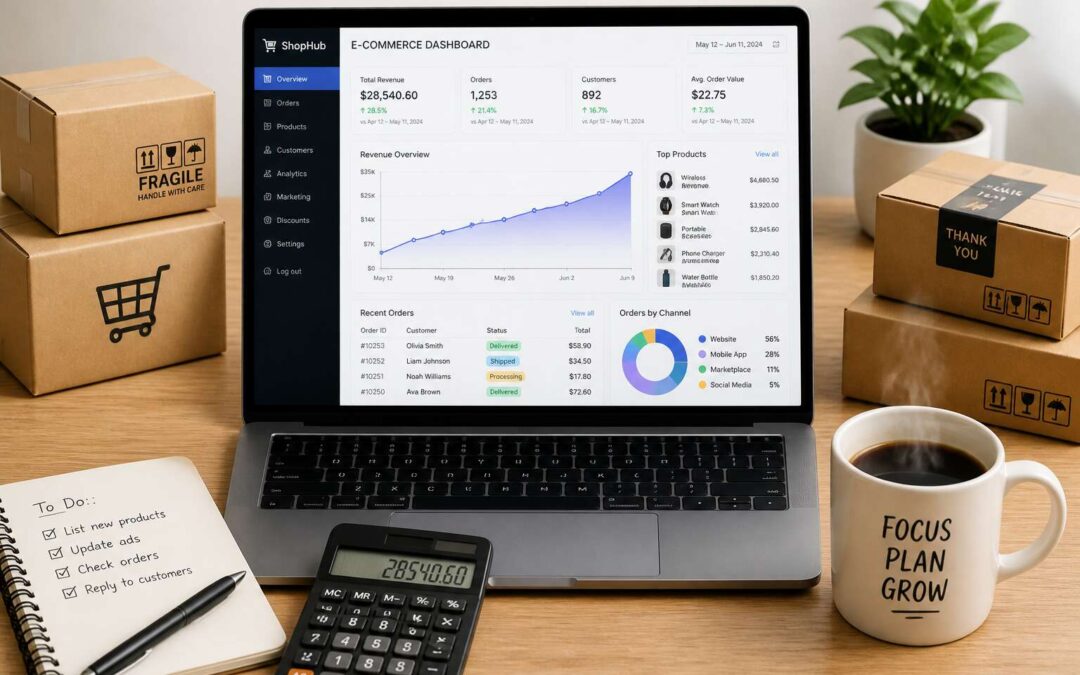
Understanding the Mechanics of Modern Ecommerce Fulfillment
How Order Fulfillment Works Without Holding Inventory
No merchant ever touches the product they sell. The customer clicks, pays, and awaits a parcel that travels from a distant supplier directly to their door. This is the core of modern ecommerce fulfillment. The storefront holds zero stock, yet orders flow every hour.
- Order data arrives instantly
- Supplier verifies availability
- Courier delivers to the buyer
The system relies on software synchronization and human reliability. When a sale occurs, the details transfer to a supplier, who packages and ships. One broken step leaves the customer in silence, eroding trust. For South African entrepreneurs, weighing dropshipping pros and cons reveals a tradeoff. You avoid storage costs, but you surrender delivery control. That tension defines this fulfillment model.
The Key Players in a Typical Dropshipping Supply Chain
Every parcel that arrives in Johannesburg passes through three distinct actors. The merchant operates the storefront, collects payment, and translates the customer’s order into a machine readable format. The supplier, often a factory in China or a warehouse in the United States, verifies stock and prepares the package. The logistics carrier handles the movement across provinces and borders.
The software layer binds these players, synchronizing inventory and triggering notifications. Evaluating dropshipping pros and cons means studying these relationships carefully. A supplier’s delay becomes a merchant’s apology. A carrier’s error becomes a customer’s frustration.
The players are simple:
- The merchant
- The supplier
- The shipping carrier
- The customer
Yet within that simplicity, the model’s weaknesses surface in every handoff. You control the front end but not the back end. The customer trusts you, while you trust a stranger in another time zone.
The Role of Automation Tools and Ecommerce Platforms
Your order confirmation is a promise. Automation tools keep that promise. When a customer in Johannesburg clicks ‘buy’, software executes the order. I have watched this happen in real time. The platform sends the order to a supplier in Shenzhen, updates the tracking number, and emails the customer. All without human intervention.
These platforms move data and hold the entire operation together. Inventory levels sync in real time. Price changes ripple across every channel. Failed orders trigger alerts before they become disasters.
Consider what automation actually manages:
- Order routing between multiple suppliers
- Inventory synchronisation across sales channels
- Tracking number collection and delivery
Each function carries risk. A misconfigured API can duplicate orders or send the wrong product to the wrong address. Software reduces human error but introduces machine error. The dropshipping pros and cons debate often ignores this layer entirely. Yet without it, the whole model stalls!
Common Product Categories and Niche Selection Basics
When a customer in Cape Town orders a wireless charger, the fulfillment engine decides whether it ships from a local warehouse or a supplier in Guangzhou. Modern ecommerce fulfillment is less about warehousing and more about routing. The dropshipping pros and cons often surface at this exact decision point. Each product category carries its own fulfillment requirements. Electronics demand speed and careful handling. Fashion requires size variability management. Home goods need bulk shipping calculations.
Common product categories in dropshipping include:
- Consumer electronics and accessories
- Apparel and footwear
- Home and kitchen items
- Beauty and personal care
Niche selection basics begin with demand depth. A niche that only spikes during holidays creates cash flow anxiety. The true test is whether a category sustains repeat purchases across seasons. Understanding these mechanics clarifies the dropshipping pros and cons because margins shift by product type. A high-ticket item with slow shipping destroys trust. A low-cost item with thin margins needs volume. The choice of niche determines which side of the equation you feel first.
The Upward Side of a Lean Retail Operation
Minimal Startup Capital and Reduced Financial Risk
Starting a conventional retail operation in South Africa can demand hundreds of thousands of rand in upfront inventory alone. Dropshipping removes that burden. You pay for stock only after a customer places an order, which is why the dropshipping pros and cons often begin with capital requirements.
This lean structure lets a fledgling business test multiple products without committing to a warehouse full of unsold goods. Financial risk shrinks to the cost of a single transaction. If a product flops, your exposure is one order, not a pallet of dead stock. For local entrepreneurs, that changes the fundamental mathematics of launching online.
Location Independence and Flexible Work Arrangements
When your entire storefront lives in the digital ether, the physical map of your business vanishes. You are no longer tied to a mall lease or a suburban warehouse. This independence lets a South African seller supervise operations from a coffee shop in Parkhurst, a guesthouse in the Drakensberg, or a garden table in Durban, provided the signal holds. The structure adapts to you, not the reverse.
Naturally, the dropshipping pros and cons include this operational freedom. Your working hours no longer follow a fixed office schedule. You can respond to a supplier in China during your afternoon, then handle local customer queries over breakfast. A basic toolkit for this lifestyle includes:
- A reliable cellular data plan for load shedding.
- A laptop with long battery life.
- Backup power for essential syncs.
This autonomy turns untapped hours into productive segments, without sacrificing income stability.
Access to a Vast Product Catalog Without Warehousing Costs
The true liberation of a lean retail operation lies in the breadth of your catalogue. Without warehousing costs, every rand stays in your pocket, ready to test new products. You can list a thousand SKUs and let suppliers hold the stock. A dusty garage no longer sets the ceiling for your ambition. This particular balance of dropshipping pros and cons offers a rare upside: scale without physical gravity. I have seen store owners pivot from camping gear to pet accessories overnight, purely by swapping digital listings.
Your supplier network becomes your warehouse, and your only constraint is the size of your curiosity. Consider the operational possibilities:
- A product range that grows with demand, not lease agreements.
- No seasonal dead stock clogging your corridors.
- No packing material clutter or insurance premiums on idle inventory.
The cost structure simply rewards experimentation.
Scalability Potential Across Multiple Storefronts
The upward side of a lean retail operation is scalability across multiple storefronts. You can operate several niche shops simultaneously without hiring extra staff or renting additional space. Each storefront targets a distinct audience, and the supplier network absorbs the demand spikes.
This structural flexibility reveals the dropshipping pros and cons in a new light. The pros include rapid expansion into new markets. The cons involve managing different supplier relationships and customer service channels. For South African entrepreneurs, this means testing regional preferences across provinces without committing to bulk orders. Your only constraint is your ability to coordinate listings, not your capital.
Simplified Testing of New Products and Market Trends
Testing a product without owning it is a strange kind of freedom. I have watched entrepreneurs in Johannesburg, Durban, and Cape Town float ideas to the market with zero warehouse risk. This is where dropshipping pros and cons become visceral: the thrill of a trending item, the silent dread of a flop.
The real gift is speed. You list a niche product, observe the response, then adjust before committing a cent! In South Africa, regional preferences vary sharply, and this model lets you probe them safely.
- A product that sells in Gauteng may stall in KwaZulu-Natal.
- Customer feedback arrives before you order stock.
- Seasonal trends reveal themselves through real time sales.
The pattern becomes clear. You learn the market without betting your capital. That knowledge compounds.
The Downward Side of a Passive Income Myth
Thin Profit Margins and Intense Pricing Pressure
The passive income myth falls apart when you face the actual numbers. Dropshipping pros and cons often centre on convenience, yet the uncomfortable truth is that thin profit margins define this model. You resell another supplier’s product at a markup that any customer can undercut with a quick search. I have seen stores earn R50 per order before advertising costs.
This creates intense pricing pressure. Suppliers control your costs, marketplaces control your customers, and you sit between them with a margin that can disappear overnight. The psychological toll is real:
- Competitors can slash prices at any moment
- Suppliers can raise costs without warning
- Customers hold no loyalty to a storefront
Every decision becomes a calculation of survival, not growth.
Dependence on Third-Party Supplier Reliability
One unreliable supplier can destroy a store. Your brand depends on operations you do not control. Stock runs dry, shipments arrive late, and quality shifts between batches. Customers complain to you, never to the supplier.
The failure modes are mundane:
- Inventory counts that are never accurate
- Suppliers who vanish after taking orders
- Products that arrive different from the listing
You issue the refunds. You absorb the chargebacks. I have watched store owners close up over a single supplier collapse. The dropshipping pros and cons discussion often skips this dependence. Your entire business relies on another company’s competence.
Shipping Complexities and Extended Delivery Timelines
The “passive income” label attached to dropshipping glosses over the practical reality. Shipping complexities become your daily burden once orders start flowing. A customer in Johannesburg waits three weeks for a parcel from Shenzhen. They do not care about your supplier’s dispatch schedule. They want their purchase. This part of the dropshipping pros and cons equation rarely surfaces in marketing material.
Extended delivery timelines create friction that no website copy can fix. Each day past the quoted arrival date generates another support ticket, another refund request. I have watched customers abandon stores over a single late delivery.
- Tracking numbers that show no movement for days
- Customs delays that eat into already tight margins
- Carriers that misroute international parcels
These problems compound. Passive income ignores the hours spent chasing lost packages and explaining timelines to unhappy customers. In South Africa, where international delivery stretches beyond expectations, the gap between promise and practice becomes obvious.
Managing Customer Service and Return Volumes
Once the delivery delay triggers the first refund request, you discover the real weight of customer service. The passive income vision disappears behind a queue of messages about lost parcels and items that do not match the photo. Return volume grows with every extended timeline, and because you never hold the stock, you cannot inspect it, repackage it, or offer a quick exchange. You are the middle person explaining someone else’s mistake.
Buyers in South Africa often raise disputes through their bank before you even see the email. That process forces you to respond fast or lose the payment entirely. The hours multiply quickly. Between chasing couriers and answering queries, the appeal weakens. This side of the dropshipping pros and cons equation stays buried in the marketing material.
Quality Control Challenges and Product Consistency Issues
Quality control is the first place where the passive income myth falls apart. The sample you ordered looks excellent, but the units your customers receive come from a different batch. The stitching is crooked, the fabric feels thinner, the colour has shifted. I have seen merchants discover this only after their first wave of orders lands.
Suppliers promise consistency, yet they juggle dozens of merchants. Your brand is one order among hundreds. In South Africa, a faulty item leads to a bank dispute or a public review that stays attached to your store for years.
- The product breaks within days of use.
- The packaging arrives crushed and unbranded.
- The same product from the same supplier looks different on the second order.
Every mismatch forces you to refund from your own pocket or argue with a supplier who holds all the leverage. That burden is the real weight of the dropshipping pros and cons decision.
Higher Vulnerability to Platform Policy Changes
In the endless debate over dropshipping pros and cons, the least glamorous risk is your total dependence on platforms you do not control. A single policy update can remove your product listings, freeze payouts, or demand new compliance paperwork overnight. You wake up to a dashboard notification and your entire storefront changes shape.
Consider the typical changes that arrive without warning:
- Advertising restrictions on certain product categories
- New payment processor hold periods
- Changes to API access for automation tools
- Sudden increases in listing or referral fees
Each one of these directly shrinks your margin or stops your operation mid-shipment. That volatility is the real weight behind the passive income myth. You are not building a permanent asset; you are operating within someone else’s rules. Every entrepreneur must hold that truth in mind when weighing the dropshipping pros and cons.
Financial Realities and Cash Flow Dynamics
Upfront Setup Costs Versus Ongoing Operational Fees
Ask any Johannesburg entrepreneur about startup costs and watch them wince. Dropshipping reshuffles the math, but it doesn’t erase the ledger. You will still hand over cash for domain registration, an ecommerce platform subscription, and automation apps. Those upfront setup costs are modest, often under R5,000. That feels like a bargain until monthly operational fees begin stacking.
Consider the ongoing charges:
– Platform subscription fees that climb as you scale
– Payment gateway percentages on every transaction
– App fees for inventory sync and email marketing
– Chargeback fees when customers dispute purchases
Cash flow dynamics deserve attention too. You pay suppliers upfront while customers expect fast delivery. That timing mismatch squeezes a small bank balance during peak seasons. This financial reality sits squarely in the dropshipping pros and cons debate because the low entry price masks continuous outflow. The real skill is managing the gap between what leaves your account and what comes back.
Marketing and Advertising Expenditures That Eat Into Margins
Marketing is where the financial reality of dropshipping reveals itself. Paid traffic on Meta and Google demands constant testing, and South African advertisers compete with global buyers for the same clicks. A campaign that converts at 3% today might lose money by Friday. Budgets evaporate quickly when you factor in creative production, retargeting pixels, and abandoned cart sequences.
Cash flow dynamics compound the strain. Suppliers want payment upfront, while courier companies like The Courier Guy won’t release parcels until you settle their invoices. Your bank account must carry that weight long before customers confirm delivery.
- Daily ad spend with no guaranteed return
- Payment processor holds on new accounts
- Seasonal spikes that demand aggressive bidding
Every rand spent on acquisition reduces the thin margins already central to the dropshipping pros and cons discussion. What often gets overlooked is how advertising expenditure, not product cost, determines whether a store survives its first year.
Handling Refunds, Chargebacks, and Payment Processing Fees
No refund is free! The payment gateway charges a percentage, the acquiring bank charges a reversal fee, and the courier never reimburses its delivery cost. For South African dropshippers, every returned order consumes capital that was already spent on supplier inventory and shipped parcels, leaving the merchant account depleted twice.
Chargebacks intensify this burden. A disputed transaction forces a retrieval request, then a bank investigation that places a hold on your available balance. Even when you win, the merchant account fees remain. These fees accumulate quickly.
- Non refundable chargeback fees per dispute
- Monthly gateway maintenance costs
- Cross border currency conversion markups
This is a central tension in the dropshipping pros and cons debate. Cash flow, not product margins, determines whether a store survives each refund cycle. Every reversal demands fresh advertising spend to replace the lost revenue, and that spend waits behind its own processing hold.
Cash Flow Management Across Seasonal Sales Fluctuations
December in South Africa brings a sales surge. Then January arrives with a thud. The quiet months do not pause merchant account deductions or supplier invoices.
Cash flow management across seasonal sales fluctuations demands a different discipline. You are not managing profit. You are managing timing. The money from a Black Friday order can take days to clear, while the supplier payment is due immediately.
Some dropshippers keep a reserve fund for these gaps. Others stagger ad spend. The dropshipping pros and cons debate rarely mentions the discomfort of watching a healthy balance shrink during a slow week, knowing the next surge is months away.
A practical approach:
- Set aside a percentage of every sale into a separate reserve.
- Track monthly sales data from the previous year.
- Reduce advertising before predicted dips.
- Negotiate longer payment terms with suppliers.
Operational and Logistical Factors to Weigh Carefully
Order Tracking and Inventory Synchronization Hurdles
If you think chasing a courier for a lost parcel is frustrating, try doing it when your supplier is three time zones away and their tracking portal updates twice a day. Order tracking becomes a guessing game, and customers expect real time visibility that most dropshipping operations simply cannot provide. This is one of the dropshipping pros and cons that often surprises newcomers: you sell the goods, but you do not control the journey.
Inventory synchronization brings its own headaches. Your supplier might show ten units in stock, yet by the time your customer orders, five other sellers have already claimed them. You oversell, apologise, refund, and hope the review does not destroy you. Common hurdles include:
- Suppliers who update stock levels manually, not in real time
- Multiple sales channels syncing to one unreliable feed
- No visibility into items that are actually reserved but still listed
The gap between what your store says and what the warehouse holds is a constant source of friction. Every order tracking delay and sync failure eats into your reputation. That is the operational reality behind the glamorous side of dropshipping.
The Challenge of Building a Cohesive Brand Experience
Every parcel that arrives without your logo is a missed opportunity to build loyalty. Dropshipping pros and cons discussions often focus on money, but the branding cost is harder to measure. Your customer ordered from you, yet the package tells a different story. There is no branded packaging, no insert thanking them for their purchase.
The practical failures stack up quickly:
- A supplier invoice slips inside the box, revealing your wholesale cost
- Promotional flyers for competing products ride along with your order
- Packaging arrives crumpled or clearly re-used, undermining your store’s image
This forces you to compete purely on price. When you cannot differentiate through the unboxing experience, you rely on the product itself. If the product is identical to what ten other sellers offer, your brand becomes interchangeable. That gap between your polished website and the physical reality is where customer confidence fades. It defines the real weight of the dropshipping pros and cons equation.
Intense Competition and Customer Acquisition Costs
Operational realities surface after the first weeks of trading. Suppliers operate in different time zones, sometimes different continents. A query sent at Johannesburg noon may receive a reply after midnight, and that delay stalls order corrections. Manual order routing becomes a daily ritual. Automation tools help, but they cannot interpret a supplier’s vague stock update or shipping restriction.
Competition tightens as markets saturate. Acquisition costs climb because everyone targets the same high-volume products. Ads for generic items require constant bid adjustments, and cost per click keeps rising for South African sellers competing against international stores with larger budgets.
- Customer lifetime value matters more than first order profit when acquisition costs climb.
- Weekly competitor price reviews reveal margin compression before it becomes critical.
Any honest dropshipping pros and cons evaluation must include this operational drag. Sustaining traction demands daily attention to logistics and paid reach.
Legal, Tax, and Compliance Obligations by Region
South Africa’s VAT registration threshold sits at R1 million in annual turnover. Cross that line, and the tax man enters your dropshipping story. That reality pushes any honest dropshipping pros and cons evaluation well beyond product margins and ad costs.
Operational and logistical factors to weigh carefully include supplier documentation, shipping route consistency, and returns handling across borders. A fair dropshipping pros and cons review must also consider legal, tax, and compliance obligations by region. The Consumer Protection Act covers customer returns and warranties. POPIA governs any personal data you collect at checkout. Customs rules decide when duties and import VAT land on your shipments.
The compliance stack on every serious operator’s desk:
- Supplier agreements with clear incoterms.
- VAT registration numbers and currency handling.
- Records of consent for customer data processing.
The Environmental and Ethical Considerations of Global Shipping
Shipping from a Johannesburg warehouse feels different when your supplier sits in Shenzhen. Every parcel crosses time zones, customs checkpoints, and carrier handoffs before it reaches a Cape Town doorstep. Operational and logistical factors to weigh carefully include tracking syncing, delivery windows, and the cost of failed deliveries. A single mislabeled item can trigger a returns process that spans continents.
Environmental and ethical considerations of global shipping add another layer to the dropshipping pros and cons equation. Air freight emits more carbon than sea freight, and packaging standards vary wildly by supplier. Consider what shifts when a customer asks about the footprint of their order:
- Revision of packaging materials at the source
- Selection of slower but cleaner shipping routes
- Transparent communication about delivery emissions
Some operators offset emissions or choose regional warehouses, but those choices raise costs. South African consumers increasingly ask how their parcels travel and what materials shield them.
Strategic Approaches to Thrive in a Competitive Landscape
Identifying a Profitable Niche With Sustainable Demand
When weighing the dropshipping pros and cons, strategic niche selection often determines whether your store thrives or fades. A profitable niche must have sustainable demand, not just a momentary spike. In South Africa, look for products that solve recurring problems or serve consistent lifestyle needs, such as load shedding essentials or specialised outdoor gear.
To evaluate a niche effectively, consider these signals:
- Repeated purchase cycles or consumable elements
- Steady search volume across multiple seasons
- Audience segments that are underserved by local suppliers
Avoid fields where dominant players can easily crush your pricing. Instead, build authority through product curation and targeted content. That approach shifts the conversation from cost to convenience, which is where small dropshipping operations can sustain momentum.
Investing in a Distinctive Brand Identity and Story
Price comparisons are easy when every store looks the same. Dropshipping pros and cons usually focus on margins, but a distinct brand identity changes the conversation. I have watched South African sellers build loyalty by telling the story behind their products, whether that involves local testing or honest supplier relationships.
Use consistent visuals and clear language across your site. When customers understand your values, they trust your recommendations. That trust reduces the need to outbid competitors. Your narrative becomes a strategic asset that cannot be copied.
Optimizing Product Pages for Conversion and Trust Signals
I have seen too many store owners treat the product page as an afterthought. The brand story draws the visitor in, but the page must carry the weight of making the purchase feel safe. This is where the battle for conversion is truly won.
For South African shoppers, this means showing local payment gateways like PayFast or Ozow. It also means being transparent about courier timelines to avoid the shock of long international waits. I recommend building a page that removes friction entirely.
- Verified customer photos that show real-world fit and quality.
- A clear, concise returns framework that does not require a support ticket.
- Short, honest product descriptions that highlight material specifics and dimensions.
These signals do more than reassure. They streamline the decision process. When you weigh dropshipping pros and cons, remember that converting a visitor relies less on aggressive discounting and more on removing every hint of doubt after the click.
Diversifying Suppliers to Mitigate Disruption Risks
Every dropshipping pros and cons list eventually collides with the reality that a single supplier becomes a single point of failure. I have watched store owners in Johannesburg and Cape Town lose weeks of revenue because a factory in Shenzhen shut down without notice. The remedy is a deliberate supplier matrix.
Diversifying means carrying complementary products across suppliers in different regions, then negotiating backup terms before you need them. For South African operators, this buffers against port congestion, load shedding disruptions, and exchange rate swings. Evaluate prospective partners on three points:
- Historical delivery performance during peak seasons.
- Responsiveness to quality disputes and returns.
- Financial stability and production capacity.
This redundancy becomes a competitive weapon. Compete on service velocity, not price alone, and let supplier reliability anchor your promise to customers.
Leveraging Data Analytics for Pricing and Inventory Decisions
Raw sales numbers only tell you where you have been. Data analytics shows you where demand is heading. For a dropshipping operation, that distinction determines whether you adjust prices before a trend peaks or after it collapses. I have seen stores in Durban react to a competitor’s price cut within minutes, simply because their dashboard flagged it. That speed is the real advantage!
Inventory decisions become equally precise. You can identify slow moving stock before it consumes capital, then shift marketing spend toward products with proven traction. This is where dropshipping pros and cons become concrete. The model’s flexibility means nothing if you operate without information. Data turns flexibility into direction.
Building a Loyal Customer Base Through Post-Purchase Engagement
A 5% retention lift raises profits by 25% to 95%, per Bain and Company. That is the opportunity most dropshipping stores ignore. The checkout button does not finish your job, it starts a new one. A customer who receives a delivery update or a useful follow-up email will buy again. The dropshipping pros and cons conversation rarely credits retention as the cheapest growth channel available.
Consider what happens after a sale lands in your store. Automated receipt, then silence. That is a monologue, not a relationship. In South Africa, where courier delays are common, a store that communicates first builds instant trust. Winning stores build a simple sequence of touchpoints.
- Immediate order confirmation sets expectations
- Proactive tracking updates answer questions early
- Product specific usage tips boost value
- Feedback requests arrive after real use
Each touchpoint keeps the brand present. A customer who feels remembered returns without heavy discounts, and that loyalty reduces the need for advertising. No competitor can copy that overnight.