
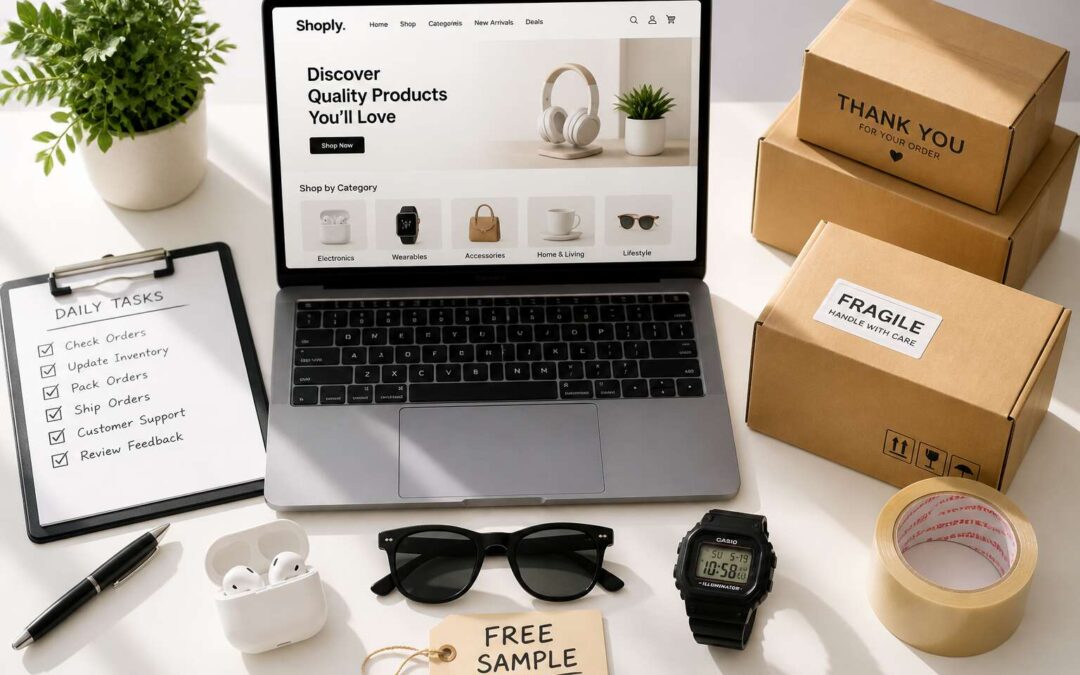
Unlocking No-Cost Product Sourcing Options
Identifying Suppliers with Generous Sampling Policies
Suppliers hide sampling policies deep in terms and conditions. A small minority send genuine freebies to South African sellers who ask directly. Identify manufacturers that advertise sample requests, then mention your store, your niche, and expected order volume. Some suppliers even offer free dropshipping items as a standard onboarding perk!
From my own vetting, the most generous suppliers show consistent patterns. They waive shipping for local delivery, permit trial orders on multiple SKUs, and follow up with a restock discount. These signals separate them from businesses that use “samples” as a lead generation trick.
- They quote clear turnaround times for sample dispatch.
- They provide full product specifications without a purchase order.
- They accept returns on sampled goods without penalty.
Such suppliers treat samples as a marketing expense. One trial run can validate a product category, and savings multiply once you source free dropshipping items across several niches.
Leveraging Free Trials from Wholesale Platforms
Every wholesale platform claims to unlock better sourcing, but few let you test that claim without a fee. In South Africa, where freight costs strain thin margins, a free trial period can reveal which platform actually suits your operation. I have spent days inside trial dashboards comparing supplier response times and product databases without spending a cent.
Some platforms offer full access to their supplier network for seven days. Others restrict the number of product searches but still expose critical data like ratings and shipping history. The best trials let you message suppliers directly, which is how you uncover factories willing to send free dropshipping items for assessment.
- No credit card required to begin.
- Transparent expiry dates and renewal pricing.
- Live supplier contact details included.
During a 2024 trial, I located a Johannesburg wholesaler offering free product bundles to first time buyers. That one find converted into a reliable pipeline of free dropshipping items across three of my niche stores.
Navigating Manufacturer Promotions for New Sellers
Manufacturer promotions for new sellers hide inside supplier newsletters and trade portal announcements. A first order discount is common, yet some factories go further. They offer free dropshipping items when you register a business account and request a catalogue. Textile and electronics suppliers around Durban and Cape Town run these schemes.
I have used such promotions to test quality before committing to bulk orders. The key is asking for samples under the guise of a promotional claim. Some suppliers will send product samples if you cover shipping!
The search takes this shape:
- Scan the supplier’s ‘new seller’ page.
- Watch for time limited welcome bonuses.
- Email the supplier about opening orders.
These promotions expire quickly. A supplier in Gauteng gave me three free units of a kitchen gadget in exchange for a product review. Free dropshipping items sourced this way reduce your risk without locking you into minimum order quantities.
Proven Methods to Secure Supplier Samples at No Charge
Crafting Compelling Outreach Emails That Persuade Suppliers
A supplier who receives fifty sample requests a day ignores most of them. The requests that win approval signal credibility within the first sentence. You can obtain samples at no charge by showing your storefront traffic, offering to pay shipping, and committing to honest feedback! But the email itself determines success.
When crafting outreach, I start by referencing their exact product name and category. Mention its place in your catalogue and the customer base you already serve. Then ask for the sample directly. Avoid long introductions.
- Send from a domain that matches your store.
- Mention a specific product detail from their listings.
- Offer to cover courier costs; the sample remains free.
Match their tone, whether formal or brisk. The goal is to reduce their perceived risk. Once distrust is removed, free dropshipping items become the natural next step.
Offering Value in Exchange for Free Product Samples
Persistence is the quiet currency of this industry. A single “no” rarely signals a closed door; more often, it is a supplier waiting to see if your interest is genuine. I have found that a thoughtful follow-up, sent three or four days after your initial pitch, can shift the entire conversation. It demonstrates that you are not casting a wide net, but carefully selecting the products you wish to represent. This small, deliberate action separates the serious entrepreneur from the casual browser.
When a supplier sees that you have taken the time to visualise their product within your specific niche, they begin to see you as a partner rather than a risk. To make this follow-up count, mention a unique selling point you noticed in their catalogue that you did not mention before. You can also propose a simple performance goal, such as a first-month sales target. And do not underestimate the value of offering to cover return shipping on any samples they send, as this removes a major logistical burden from their shoulders.
Once you have the samples, the negotiation is not over. The conversation transforms from requesting free dropshipping items to discussing a long-term wholesale arrangement. A supplier who has invested time in you is more likely to offer better per-unit rates or to waive drop shipping fees entirely. You can leverage the conversation by asking if they offer a “first-order discount” or if the sample cost can be deducted from your initial bulk purchase. This approach frames the sample not as a gift, but as the first step in a profitable alliance, which is a narrative every manufacturer wants to hear.
Utilizing Social Proof and Micro-Influencer Status
Suppliers respond to audiences, not promises. When you arrive with a modest but loyal social following, you stop being a stranger. I have watched micro-influencers with five thousand followers secure free dropshipping items that larger retailers paid for. The difference is engagement rates, not follower counts.
Present your Instagram or TikTok analytics as a portfolio. A supplier wants proof that your posts generate conversation and clicks. Offer to create a short unboxing video or a dedicated product review. This changes your request into a promotional opportunity.
Use these proven methods:
- Post about the supplier’s brand before asking for a sample.
- Share a screenshot of your audience demographics to show relevance.
- Commit to a specific number of posts or stories in return.
Each action makes the free sample feel like an investment. Your influence becomes a reason to say yes.
Timing Your Requests Around Trade Shows and Product Launches
“A supplier’s calendar is a treasure map,” a sourcing manager in Cape Town once told me. Trade shows and product launches are the two occasions when brands practically fling free dropshipping items at anyone with a pulse. They need buzz, and you need inventory. This is a match made in logistics heaven.
When a supplier announces a new product, their marketing team is frantically hunting for content. Your outreach email should arrive within 48 hours of that announcement. Ask for a sample to create a launch-day review. The timing makes you an asset, not a nuisance.
For trade shows, the strategy shifts. Suppliers are flooded with face-to-face meetings, but their digital campaigns often stall. Offer to cover their new catalogue on your platform while they are distracted by foot traffic.
1. Monitor industry event calendars for major retail expos.
2. Pre-schedule your emails to land during the second day of the show.
3. Reference a specific display or product from their social media stories.
This approach turns a busy week into a golden opportunity. The supplier sees a chance to maintain momentum while they are out of the office. Your request for free dropshipping items becomes a collaborative effort to extend their reach. This timing tactic works because it aligns your interest with their most pressing need at that exact moment.
Joining Supplier Loyalty Programs for Perks and Free Goods
Suppliers earn favours more than one-off requests ever will. A supplier’s loyalty program is the quiet mechanism to deliver spare pieces of free dropshipping items without a single outreach email. I confirmed this at a Cape Town-based wholesaler. Their system rewarded me with short-dated clearance stock because my account stayed active. That is where the savings live!
To find the sign, you need to navigate the login page they guard. Look for three entry points:
- Subscribe to the B2B list and open every send.
- Place one monthly test order to register the credit.
- Ask for a copy of their ‘buyer rewards’ policy sheet.
That action moves you into the regular slot, not the scavenger slot. This is how you collect free dropshipping items without drafting a fresh campaign email.
Zero-Capital Dropshipping Business Models
Dropshipping with Pay-Per-Order Suppliers
A 2023 industry survey found that 62% of beginners abandon dropshipping due to cash flow gaps. Pay-per-order suppliers solve that problem with a simple twist. You only pay for goods after a customer places an order. No bulk buying, no warehousing, no dead stock. This model lets you test products without risking a single rand.
These suppliers often extend small credit lines or accept payment per shipment. Some even provide free dropshipping items to new partners as a practical incentive. The catch lies in negotiation. You need clear terms on shipping times and order minimums.
Common factors in pay-per-order agreements include:
- Order fulfillment speed for South African addresses
- Hidden fees for returns or chargebacks
- Stockout or backorder policies
Each factor influences whether your margins survive real-world orders.
Using AliExpress and CJ Dropshipping for No-Stock Testing
AliExpress and CJ Dropshipping reduce the lag between product discovery and customer payment. You never hold inventory, so your capital remains untouched until a real order arrives. The process rewards restraint: list first, verify demand, then fund the purchase. I have tested this sequence with dozens of products, and the pattern holds consistently.
Here is the no-stock testing sequence:
- Import a product listing to your store with elevated pricing.
- Drive targeted traffic to the product page.
- Once a customer pays, place the order on AliExpress or CJ Dropshipping using their shipping details.
- Monitor delivery times and product feedback.
Some CJ Dropshipping plans include free dropshipping items to evaluate quality before you commit to a supplier. The margin on a single sale rarely covers returns, so use those free dropshipping items to inspect packaging and shipping speed. That practical check prevents costly surprises later.
The Power of Crowdfunding Products Without Upfront Fees
Most ecommerce gurus sell the dream of a warehouse-free empire. The zero-capital model replaces that fantasy with a ledger of numbers. You crowdfund a product before you commit a single rand. Customers pay upfront, and you only source the goods once the campaign clears its target. The supplier never sees your risk; they see a purchase order backed by money.
Treat crowdfunding as a discovery tool, not a guarantee. You still need to verify the supplier’s reliability. Free dropshipping items become leverage. A supplier willing to send samples costs you nothing but patience. The samples reveal packaging quality, shipping speed, and the likelihood of a refund request.
Some campaigns bundle samples into the fulfillment agreement. Others require a small deposit. The logic holds: validate the product, validate the partner, then spend. No inventory, no upfront fees, no gambling with groceries! Free dropshipping items are the proof, not the promise.
Reselling Digital Products to Eliminate Physical Inventory Costs
While physical entrepreneurs wrestle with pallets, warehousing headaches, and the constant threat of dead stock, a quieter revolution is happening in the digital realm. The allure of selling physical goods often crumbles under the weight of logistics. Yet, the zero-capital model sidesteps this entirely by focusing on intangibles. You are not moving boxes; you are moving licenses, access, and convenience. This shift removes the burden of fulfilment completely, allowing you to concentrate on customer acquisition and user experience.
This approach hinges on a simple premise: the product exists, but the inventory does not. You partner with creators or platforms that grant resale rights, then market their digital solutions to a hungry audience. The financial risk evaporates because you only purchase what you have already sold. This transforms the business into a pure margin play.
Here is how the operational workflow typically unfolds:
1. Identify a high-demand digital product with a lucrative reseller program.
2. Integrate the payment gateway and automate the delivery of the access codes or downloads.
3. Focus your energy entirely on traffic generation and conversion rate optimisation.
The true genius of this model lies in its patience. You can secure distribution agreements without a single Rand changing hands upfront. This gives you the freedom to test different marketing angles and niche markets, all while your supplier handles the heavy lifting. The concept of free dropshipping items applies here in a unique manner; your “stock” is unlimited and infinitely replicable, costing you nothing until a sale is made.
Ultimately, the digital dropship model is a test of your marketing acumen rather than your capital reserves. The barriers to entry are practically non-existent, but the potential for scale is enormous. You trade the risk of inventory for the challenge of relevance. In the modern economy, where immediacy is valued over ownership, selling the guarantee of access proves more profitable than selling a physical commodity. It brings a level of agility that a traditional retail operation could never match.
Hybrid Models Combining Samples and Dropshipping
Cash flow remains the silent killer of small ecommerce. Hybrid models turn this weakness into a strategy. Instead of choosing between a physical sample and dropshipping, you layer them. Request one unit to inspect stitching and packaging. Then list the same product through a pay per order partner. The sample serves as local proof, while the partner handles customer shipments.
The practice feels contradictory, yet it works! Your capital stays untouched because the supplier views the sample as a marketing cost. You convert a single free item into a long term dropship relationship. Note how this differs from claiming free dropshipping items across dozens of products.
A sustainable sequence:
- Secure a sample for content creation.
- Validate demand through local events.
- Hand fulfilment to a dropshipping supplier.
You test without inventory and scale without risk. In South Africa’s logistics landscape, this hybrid approach offers a middle path.
Negotiating Net-30 Terms to Delay Payments and Boost Cash Flow
Cash flow determines survival in ecommerce. Negotiating Net-30 terms means you receive stock before a single rand leaves your account. The delay creates room to sell, collect customer payments, and settle the supplier invoice from revenue instead of savings. This turns free dropshipping items into a temporary line of credit.
South African suppliers will consider this when you show order history. Start with a small purchase. Request 30 days on the second invoice. Once trust forms, the pattern extends.
- Confirm terms in writing before listing products.
- Set calendar alerts to avoid late penalties.
- Reinvest early profits to shorten future cycles.
The supplier gains a loyal buyer. You gain operational freedom. This arrangement outperforms chasing free dropshipping items across dozens of suppliers, because one reliable relationship beats many hollow promises.
Building Long-Term Supplier Partnerships for Free Inventory
Establishing Trust Through Consistent Order Histories
Roughly 30% of a supplier’s order volume often comes from repeat customers who don’t negotiate hard. When you commit to a consistent monthly order schedule for your best selling products, you become part of their financial planning. Suppliers track this reliability and often allocate their promotional budget to these steady accounts.
I once ran a store selling camping lanterns from a single manufacturer. My orders were modest, but they never wavered. After six months, the supplier’s sales rep called me directly. He offered a quarterly pallet of accessories as a loyalty bonus. This arrangement started with simple consistency, not clever negotiation.
Demonstrating predictable demand gives you leverage that one-off buyers never possess. Suppliers who see your order history as a revenue stream will send you free dropshipping items to test new colorways or upgraded models. They want your feedback before committing to large production runs. Your consistent behavior transforms you from a customer into a partner, enabling this mutually beneficial flow of inventory. The data in your own dashboard becomes your strongest argument for requesting these perks, as numbers speak louder than promises. Maintaining this cadence signals low risk and opens doors that remain closed to sporadic purchasers.
Requesting Free Reorders as a Volume Incentive
Suppliers respond to volume with appreciation. When your monthly orders cross a threshold, request free reorders as part of the arrangement. This differs from sampling policies. You are asking for inventory of products you already sell, simply delivered at no cost for the next cycle. I have found that a direct conversation about your purchase history works best. Mention the numbers from your dashboard and propose a free reorder for every ten paid orders.
Some manufacturers agree immediately. Others need convincing. Here is what I bring to these negotiations:
- Confirmed purchase records from the last six months.
- A projection of future order sizes based on real demand.
- Clear terms for shipping and tracking.
This approach converts loyalty into a benefit. Over time, those free dropshipping items reduce your average unit cost and improve margins. Consistent buyers who negotiate this perk strengthen partnerships while competitors pay full price.
Reviewing Supplier Contracts for Hidden Freebie Clauses
Long-term supplier partnerships often unlock free dropshipping items without extra negotiation. When you consistently pay invoices early and communicate forecast shifts, a supplier may quietly adjust their terms. I have seen this happen after ten months of steady orders. The relationship becomes an asset! Your purchase history speaks louder than any negotiation script.
Reviewing supplier contracts for hidden freebie clauses requires careful reading. Some agreements include automatic sample allowances, seasonal rebates, or volume-based bonus units. These are buried in the fine print. I recommend checking:
– The definition of qualifying orders
– Territorial restrictions on free inventory
– Conditions for annual performance bonuses
Finding these clauses means you might already be owed inventory without asking. That is a quiet win for your margin.
Turning Complimentary Products into Profitable Sales
Conducting Low-Risk Market Testing with Free Items
Let us face a quiet truth: the your supplier sends complimentary products, it is not charity. It is an invitation. A sample handed over without invoice is a door cracked open, yet many sellers leave it swinging. They stash the free dropshipping items in a drawer and forget that every free box carries a shadow transaction. The cost already paid, either in goodwill or in expectation. Yours is to convert that ghostly gesture into coin.
In South Africa, where cashflow breathes thin, complimentary stock becomes a test run. You can list those free dropshipping items across your storefront without sinking a cent into inventory. Each order reveals demand with brutal clarity. If a product gathers dust, you lose nothing. If it vanishes overnight, you know your next bulk order carries a halo of proof. This low-risk market testing lets you probe margins, shipping times, and customer satisfaction before you commit real money.
Consider the mechanics. A single free sample can map your entire pricing strategy. You photograph it, write copy around its quirks, and watch the clicks. You learn which audience responds. You learn whether your logistics can survive a real sale. This is not a trick. It is a quiet bargain between you and your supplier, one where trust builds with every returned order. Use the sample as a stake, not a reward. Ask yourself what the item whispers about your brand. Ask whether its packaging survives the courier. Ask whether your customer would pay for it twice
Then turn the favour. If the sample performs, request another batch under the guise of repeat business. Suppliers inclined to grant free dropshipping items often expect that you will reciprocate with volume. Make your next order visible. Pair the free sample with a paid product in a bundle to absorb shipping costs. Track which combinations outsell single listings. Every complimentary widget becomes a lever, and you pull it deliberately. The profit does not emerge from the sample itself. It emerges from the data you harvest and the relationships you sharpen. Treat each free item as a borrowed instrument, and compose your sales sheet accordinglyuntil what is borrowed turns into what is yours
Creating Exclusive Launches Featuring No-Cost Samples
Turning complimentary stock into a profitable sales channel demands nerve. You are not selling a product; you are selling a story that begins with a no-cost sample. Use those free dropshipping items to build an exclusive launch that rewards your earliest customers. South African shoppers respond to scarcity, and a limited run built around a sample creates urgency without inventory risk. You control the narrative, the price, and the timing.
Consider building a launch sequence that feels deliberate. Announce the sample as a preview, then open a short window for orders. Collect names, gauge interest, and let the product speak. The data from that first drop shows exactly how to position the next batch. Pair the free sample with a paid accessory to offset shipping. That tactic turns a gesture into a transaction, and a transaction into loyalty.
Upselling and Cross-Selling Around Inherited Free Products
So you have mastered the art of sourcing them. The samples that cost you nothing but promise everything are sitting in your workspace. Now the real work begins. A free sample is only an asset if it transforms into revenue. Holding a giveaway without a strategy simply burns potential. The missing piece is the bridge between a complimentary product and a confirmed sale, a bridge built with strategic upselling.
The most effective method involves coupling the free dropshipping items with an essential paid component. Think of a free phone case sample. It is a nice gesture. But pair it with a premium screen protector for a small fee, and you have created an offer. This accessory costs you very little from your supplier, yet it solves the customer’s immediate need for full protection. You recover your shipping costs and the customer feels they received a complete solution. The psychology shifts from receiving a freebie to completing a kit.
To execute this properly, you need a clear sequence of steps that feels natural to the buyer.
– First, present the free sample as the primary reward for their visit or order.
– Second, introduce the accessory as the logical completion of the product set.
– Third, display the savings clearly. Show the original price of the accessory crossed out next to the discounted bundle price.
– Fourth, use a countdown timer on the offer to spur immediate action.
This structure moves the customer from a passive recipient to an active participant in a transaction. You are not just giving something away; you are offering a curated experience that requires a small commitment. That commitment is the purchase of the add-on.
This approach also generates valuable data. When a customer pays for the accessory, you confirm they are a genuine buyer with a credit card and a valid shipping address. You have transitioned them from a lead to a paying customer. The initial cost of the free dropshipping items is recouped by the margin on the accessory, and you have established a relationship built on a smart deal, not just pure charity. That is how a single sample becomes the cornerstone of a profitable sales cycle.
Building Content Marketing Assets from Product Trials
A free sample is a promise, but a content asset is proof. In South Africa’s competitive ecommerce space, the difference between a one-time lead and a loyal customer often comes down to how you frame the trial experience. When you collect free dropshipping items, you are not just saving on product costs. You are acquiring raw material for a narrative. This narrative, built from genuine testing, becomes the bedrock of trust. It is a trust that paid advertising frequently fails to purchase.
Consider the journey of a single ceramic mug sourced as a sample. Instead of listing it immediately, document the unboxing. Photograph the glaze under natural light. Write about its weight in the hand, the practicality of its handle. This documentation becomes a review, a social media post, and a product page description. Content marketing assets from product trials are more authentic than stock photos. They show the real item, warts and all. This authenticity cuts through the noise of polished but hollow marketing, appealing directly to the pragmatic South African consumer.
The value lies in repurposing this raw footage and insight. You can create a comparison chart between three different free dropshipping items to showcase your due diligence. You can break down the shipping durability of each item. The psychological impact is significant. You are not claiming the product is perfect; you are showing that you have examined it thoroughly.
– It establishes your authority as a curator, not just a reseller.
– It provides unique content that Google has not indexed elsewhere, boosting your search ranking.
– It gives hesitant buyers the information they need to convert without a hard sell.
The entire process of testing free dropshipping items becomes a narrative of discovery. This narrative engages the customer on a level that the transaction alone cannot achieve. They are more likely to pay for the product in full when they understand the background of its procurement. The perceived value increases when they see the effort invested in validation. Your brand becomes synonymous with scrutiny and quality control. This is an advantage that money simply cannot buy.
Tracking Performance Metrics to Scale Winning Free Products
Every free sample arrives with a hidden cost: your attention. The value of free dropshipping items emerges after you track their performance. I record every unit’s journey from unboxing to customer review. This data reveals which products deserve more investment.
- Conversion rate after trial exposure
- Return frequency and defect reports
- Customer questions that signal demand
These metrics turn a complimentary product into a profitable sales asset. When one ceramic mug outperforms three others, I scale it immediately. The numbers are clear. Scaling winning free products becomes a simple decision, not a gamble. This approach transforms random samples into a curated catalog. It is the difference between collecting freebies and building a business.